
As search engines evolve with artificial intelligence, digital marketers are shifting their focus from traditional Search Engine Optimization (SEO) to Generative Engine Optimization (GEO). GEO is the practice of optimizing content so that AI-powered search platforms, such as ChatGPT, Google AI Overviews, Perplexity, and other generative search systems, can easily understand, reference, and cite it when answering user queries.
With this shift, one question frequently arises: Do backlinks still matter? The answer is yes, but their role has changed significantly.
Traditionally, backlinks have been one of Google’s strongest ranking signals. A backlink from a reputable website acts as a vote of confidence, indicating that your content is trustworthy and valuable. Websites with a strong backlink profile have generally ranked higher in search results because search engines interpret these links as indicators of authority.
In the GEO era, however, AI systems evaluate content differently. Rather than relying solely on link popularity, they prioritize content that is accurate, comprehensive, well-structured, and demonstrates expertise. Large language models are designed to synthesize information from multiple trusted sources, making the quality of the information itself increasingly important.
That said, backlinks continue to play an important supporting role.
High-quality backlinks help establish your website’s credibility across the web. When authoritative publications, industry blogs, educational institutions, or government websites reference your content, they strengthen your reputation. Search engines still use these signals to assess domain authority, and AI-powered search systems often rely on trusted websites that already perform well in search ecosystems.
The emphasis has shifted from the quantity of backlinks to their quality and relevance. A handful of links from respected industry sources can provide far more value than hundreds of low-quality or irrelevant links. Natural editorial mentions carry much greater weight than artificially created link-building schemes.
Backlinks also contribute to content discovery. AI models and search engine crawlers continuously explore the web to identify new and updated information. When authoritative websites link to your content, it becomes easier for search engines to discover, index, and evaluate your pages. This increases the likelihood that your content will be included in future AI-generated responses.
Another important factor is brand authority. GEO favors brands that are consistently mentioned across multiple trusted platforms. Even unlinked brand mentions can reinforce your reputation, while backlinks provide stronger evidence that your expertise is recognized by others. Building a recognizable brand has therefore become just as important as acquiring links.
To succeed in GEO, marketers should focus on earning backlinks rather than simply building them. Publishing original research, industry reports, case studies, surveys, expert interviews, and unique insights naturally attracts citations from journalists, bloggers, and industry publications. High-value content earns links because it provides information that others want to reference.
Digital PR has also become a powerful GEO strategy. Securing coverage in respected media outlets, participating in industry events, contributing guest articles, and sharing expert commentary help generate both backlinks and broader online visibility. These signals collectively strengthen your authority in the eyes of both search engines and AI systems.
Equally important is creating AI-friendly content. Clear headings, concise answers, structured formatting, factual accuracy, updated statistics, and schema markup make it easier for generative AI systems to understand and reference your content. Backlinks alone cannot compensate for poorly written or outdated information.
The future of digital visibility is not about choosing between GEO and backlinks. Instead, successful organizations combine both approaches. They build authoritative content that deserves citations while simultaneously earning high-quality backlinks that reinforce trust and credibility.
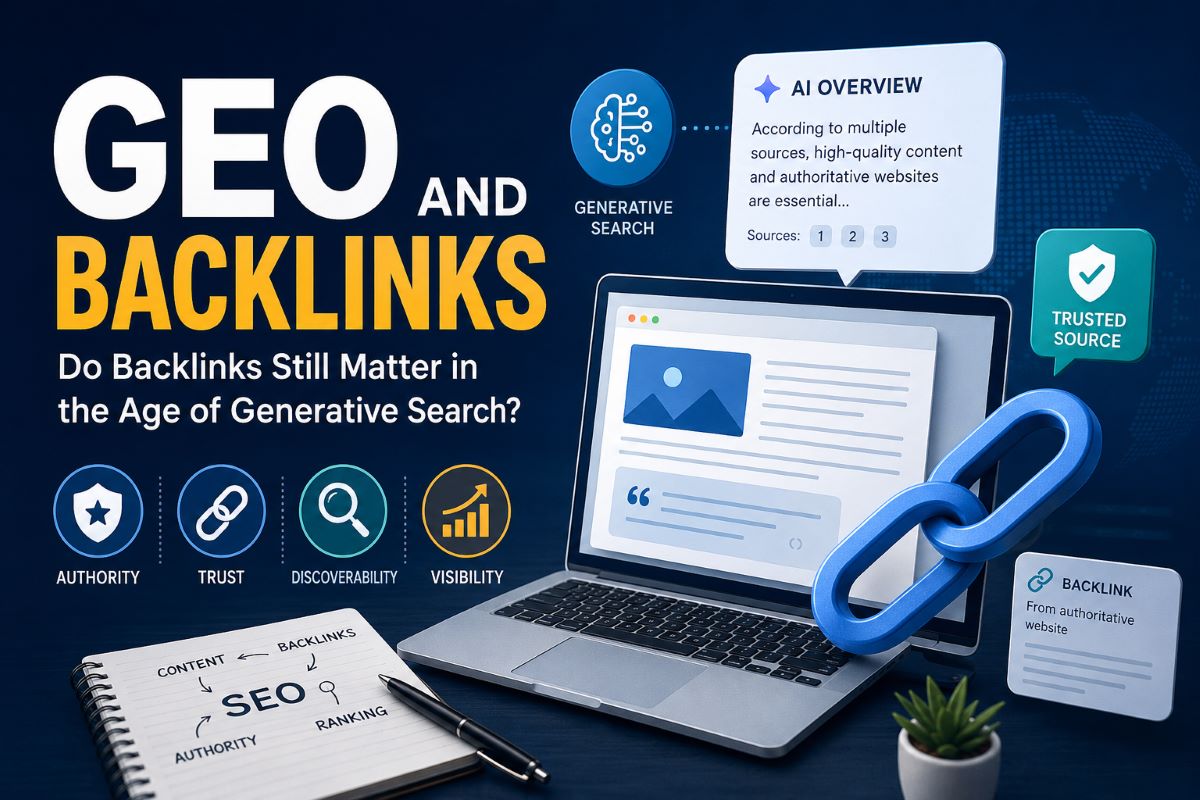
Backlinks remain valuable in the age of Generative Engine Optimization, but they are no longer the primary objective. Their true value lies in supporting authority, trust, discoverability, and brand reputation. The websites most likely to succeed in AI-powered search will be those that consistently publish exceptional content, earn genuine editorial recognition, and establish themselves as trusted sources of information. In the GEO era, backlinks are no longer the destination, they are the outcome of creating content that genuinely deserves to be referenced.
Contributed by GuestPosts.biz